 DONATE TODAY

Peoples of the Mesa Verde Region
Archaic: 6000 to 500 B.C.Food
Like the people of the preceding Paleoindian period, those of the Archaic period were hunter-gatherers who continually moved in their search for food. But the territories of Archaic peoples—though large—were smaller than those of earlier peoples. Archaeologists believe that Archaic hunter-gatherers traveled over well-established routes, returning to favorite areas about the same time each year as plant and animal resources became seasonally available. This practice is called "making the seasonal rounds." With the extinction of the megafauna at the end of the Ice Age, Archaic peoples had to rely on other animals for their protein. Deer, elk, and bighorn sheep were important sources of meat, as were smaller animals such as rabbits and rodents. All these animals could be hunted without having to travel great distances. 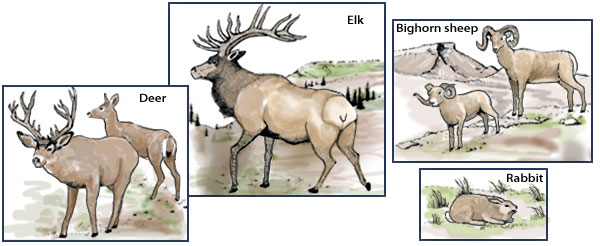
Archaic people of the Mesa Verde region hunted deer, elk, bighorn sheep, and rabbit. Even though Archaic peoples undoubtedly were skilled hunters, the types of artifacts found at Archaic sites suggest that the gathering of wild plant foods became increasingly important during this time. Wild grasses, greens, roots, tubers, seeds, nuts, and fruits were collected as they came into season, and plants that weren't eaten immediately were stored for future use. 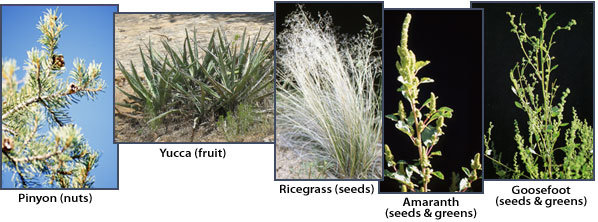
Wild plants were an important food source for Archaic peoples.
Archaic peoples' interest in plant foods would have led them to carefully observe where and under what conditions different plants grew best, knowledge that likely prepared them for the introduction of agriculture late in the period. Corn and squash first appeared on the Colorado Plateau about 1000 to 2000 B.C. and in the Mesa Verde region proper by at least 400 B.C., and probably earlier. The transition to farming was gradual, and the new foods and the technologies used to grow them did not have a major impact on lifeways during the Archaic period. People continued to travel in their search for wild foods, but they began experimenting with plant cultivation as their seasonal rounds permitted. People may have planted corn and squash seeds in places that had good soil and the possibility of adequate moisture, before continuing their travels for weeks or even months. Later, they would return to harvest the fruits of any plants that managed to survive and mature. Alternatively, some members of the group might have stayed near the gardens through some or all of the growing season, tending the plants and protecting them from animal pests.
. . . about the beginnings of agriculture in North America and the Southwest. |
|
Acknowledgments | Illustration credits | To borrow, cite, or request permission | Please take our survey! Title page for Peoples of the Mesa Verde Region |
|
